Saturday, March 5, 2011

Starbucks beware

Cross Cultural Solutions does a brilliant job of exposing us to as many parts of Tanzania as time allows.Volunteering is only half of the objective of CCS.  Their goal is twofold. They want Africa to get to know us, and for us to get to know Africa.  Often they would load us up in the vans and we'd take off on an adventure.

First stop is the Baobab Tree. This tree can provide food, shelter, and water for animals and humans.  The bark is fire resistant, and is used for cloth and rope.  It bears fruit called monkey bread, which is rich in vitamin C. Leaves are used for condiments and medicines. The older trees are hollow and provide shelter.  It can also store hundreds of liters of water which can be tapped during dry periods.
Hmmm, wonder how much the rent is...
Then we went to a blacksmith's shop where the spears of the Chagga Tribe are made.
Traditional Chagga Hut
We learned how the Chagga Tribe lived in their villages.  We also went spelunking down into their caves to see how they hid from warring tribes. One clever thing I learned was they would fold a banana leaf and place it above the door of their hut as a message to visitors.  If it was folded one way, it meant, 'I’m home, and you are welcome.'  Another fold, and it was 'I’m gone but I’ll be back shortly.'  Lastly, 'I’m gone for a long time, don’t wait for me.'  Another leaf, left by the visitor said, 'I was here.'  Is this the beginning of voice mail?


Did you know coffee actually comes from a berry?  I didn't.  Coffee starts as a berry and has the bean inside.  We went to Oscars home, which is a small coffee plantation in the foothills of Kilimanjaro.  He taught us how to make the best coffee we'd ever tasted.  

 
We picked the berries from the tree
this machine separates the berry from the bean

Oscar sifts the beans to remove the bad parts
coffee beans are stirred constantly for 20 minutes over the fire, roasting them to perfection
cooling time
grinding

mmmmmmm... a latte to go please

Afterward, pumped up on caffeine, Oscar led us on a hike to a spiritual place for his village,
a huge waterfall


on the way


Notice the people in the lower right hand corner
for a perspective on how high the waterfall is.
Stunning


African Artists are everywhere in Tanzania.  There are so many beautiful things here to capture on canvas.  One day CCS brought two artists to home base to teach us the process of Batik, which is a very popular art form here.  The Artist's brought all the supplies: paint, wax, canvas, and an iron.  They explained the lengthy process of waxing and painting, waxing and painting.  I decided to opt out of this activity because I cannot draw.  I am in awe of anyone who can bring a scene to life through brushstrokes or a pen.  When I see a blank canvas, I am paralyzed.  I can bring a stage to life, by writing and directing, or tell a story through film and editing, but I cannot move a pencil across a piece of paper and create a picture.  I just can’t.  My roomies informed me that I would not miss out on any opportunity that CCS offered, so I’d better just sit myself in the chair.  Reluctantly, I picked up my pencil at stared at the canvas for a good thirty seconds.  In another ten, I had drawn one arched line across the center. 
       “Done.”  I announced to my table. 
       “What?!” 
       “No way!” 
       “What in the world did you draw? Show us.” 
       I turned my canvas around and proudly stated, 'Kilimanjaro.'  They laughed and talked about how ridiculous I was.  


Saturday, February 26, 2011

The Innocents

Orphans.  The mere mention of the word tugs at heartstrings.  We’re talking about children who have lost the very core of who they are, their stability in a crazy world: their families.  We can’t seem to think about it for very long because it’s too distressing, and we can’t even begin to imagine life without ours, flawed as they may be.  But these children have no choice.  Life has dealt them a blow and they must soldier on, there is no other way.  The best they can hope is that they land in a place where people love them. Really love them.  But how often do you run across people who will love another person’s child, much less thirty of them, or a hundred? 
One afternoon as a part of our cross culture, CCS took us to NEEMA Orphanage to spend time with the children. We drove an hour up into the foothills of Kilimanjaro, and went through a huge metal gate, to find forty tiny children running down the hill towards us.  The Catholic Church runs NEEMA, with nuns and volunteers as the caregivers.  The facilities were large and striking by African standards with three buildings, one for the infants, one for toddlers, and the last for older children.  Progress was being made on a fourth building with the goal of caring for the children until they were eighteen years old.  We played at the gate, hugging and holding as many children as we could possibly fit into our arms. Eventually the nuns said it was potty time. 
       We herded the children up the hill to their dorm.  At the building, the volunteers pulled off the children’s little shorts (no undies), and threw them in a pile as they went inside the door; their rubber sandals went into another pile.  Lined up against the wall was a row of  ten small plastic training potties.  The first set of children took a seat to do their business.  From there they moved onto another station where their shirts were removed and they were given a stand-up bath in plastic tub.  Afterwards, they went to sit on a table where lotion was applied to their arms and legs. (many Africans constantly battle dry skin)  A new set of clothing awaited them, which they would wear for the next several days.  At the door the children slipped their feet into the top two shoes on the pile, matching or not, and took off again to play.  It was an amazingly efficient system they had created, and at every station, the caregivers spoke lovingly to each child while they tended to them.  The children went through the routine mindlessly as though they had done it a hundred times before.  It seemed a little like growing up in a summer camp.  All of their needs were taken care of, and they were loved, but a handful of adults for 80 children meant undivided attention was nearly impossible.
       Children end up in the Orphanages for different reasons.  They may have lost both parents, due to AIDS, or other circumstances.  The AIDS epidemic alone has orphaned children at astonishing rates.  Even if a child has lost only one parent he could be orphaned.  If his father dies, his mother cannot earn money and feed the children, so they go to an orphanage.  If she remarries, the new husband often will not accept her children, and they are sent away because she must live.  If the mother dies the father does not know how to care for a child, and must work to earn money, so the children are left on their own or sent to an orphanage.  The children are screwed either way.  Sometimes the children may actually have family, but the parents are too sick, destitute, or don’t want to care for them.  Sometimes a parent may be trying to get them out of a bad situation. Many children have been abused or molested and orphanage workers must keep careful watch to make sure they don’t abuse each other, because that is all they know. The ideal situation is to keep them in their own home, with a relative, or at least in their village, but this does not always happen.  The Tanzanian government doesn’t fund or run orphanages for this reason.  They say the relatives and villages should take care of their own.  The orphans are left to the good will of the private sector.
       Tuleeni Orphanage is full of good will, even from the children themselves.  Tuleeni has a relationship with CCS, so several of my fellow volunteers were placed there for work. They told me that the older girls, who are teenagers, take turns doing the cooking.  They will leave class early on their day, make the porridge, serve it and clean up. Everyone has specific jobs at this small, dilapidated orphanage, run by a mother who began “inheriting” children.  The young boys clean, and chop wood (with an axe!) The girl’s clean, cook and do laundry.  Older children look after the younger ones, and everyone takes care of each other.  They sleep in small rooms with bunk beds, several children to a mattress, until they no longer fit. 
       We were invited over on Christmas Eve to watch a performance by the children. We piled into two vans, and stopped at a grocery store on the way to buy gifts to take with us.  Bags of rice, beans, oil, towels, notebooks and pencils were loaded into carts.  One volunteer held in his hands, a soccer ball and bags upon bags of candy,
        “What?! They’re kids. It’s Christmas for crying out loud.”
       The performances were adorable and afterward we played and hugged.  At one point Seri was looking for a particular little boy and she found him in the bunk room.  He owned one cardboard box of possessions, and he was folding his clothes neatly and storing them in the box.  Seri got a lump in her throat.  Being with the children was a beautiful way to celebrate the holiday.
       A friend of mine came to town and we went to Tuleeni again to play with the kids over the holiday.  We played Ring Around the Rosie, and Duck-Duck-Goose, which to them was Chui-Chui-Simba. Leopard Leopard Lion.  At one point I sat to feed baby Jonathon his porridge, and was bumped by a running child, spilling some of the porridge.  A young girl appeared with a rag (filthy), wiped the porridge off Jonathon, off me, then off the dirt floor of the courtyard.  I got choked up at the thought of her wiping porridge off the dirt, and wondered what was the point.  Then I realized this was her home.  I moved across the courtyard where my friend was at a table reading books to the kids.  A small girl named Irene climbed up onto the picnic table behind my friend.  She bunched her tattered sleeve into her hand, took off his cap, and wiped the sweat from his brow.


NEEMA Orphanage

     
my sweet friend Kristen laid on the floor to play with 9 year old
Ana who was unable sit up or walk

patty cake patty cake


Tuleeni Orphanage

performance at Tuleeni


porridge time 


Christmas gifts 
Chui Chui Simba


Thanks to Seri for some of these photos.


Wednesday, February 23, 2011

Perspective

       So many different things were happening every day in Africa that I couldn’t write them down fast enough.  Our days were a whirlwind of startling new experiences, and activities. The excitement and energy that flowed through home base was electric, although tampered with great moments of sadness at distressing things we’d witnessed.  It often seemed that in Tanzania you could see the most beautiful thing you’d ever seen and the most difficult, all in the same moment.  And that could possibly be every moment.  The poverty constantly sent everyone into emotional over load. Africa is very complex.  It would take years to even begin to understand the complicated nature of this continent. I watched as my fellow volunteers poured their hearts into their work, trying to make even a small difference in the quality of life for these beautiful people.  They loved every moment of their time spent at CCS. But something very different was happening to me.
        As I landed in Africa, something in me was altered, and it continued to plague me as the weeks went on.  I went through the activities and events with awe and wonder, but I was not myself at all.  I realized this had become evident when several of my fellow volunteers called me “the quiet one”.  I’m sure those of you who know me could not ever imagine this happening, and I myself was shocked.  Quiet is something I have never been called in my life, but I realized it was true.  I had been quiet, and they didn’t know otherwise about me.  Words would not come to my feelings, and I couldn’t figure out what was happening.  I found myself deep in thought at times analyzing the moment, rather than living it as I had always done before. I’ve always been passionate about life, and been one who would dive right in one hundred percent, but instead I was numb.
        One morning my roommate Nancy asked me how I had slept the night before.  As I said the words, “not very well”, I slumped back on the bed, and the secret of my feelings came pouring out.            
       “Lucetta, I think you may be getting a little ahead of yourself.  You’ve only been here for a short while.”
       “But the others are already bonding with the people here and with Moshi.  I admire the African women and I want to fight for their plight, but I don’t feel anything.”                                                
       “First of all, the others only have three or six or twelve weeks here, they have to bond quickly.  Second, it’s a very different experience for the rest of us. We have come here as an interlude to our lives, while you have come here as a way to begin a new life.”                                                                  
       “But, I thought I was going to come here and this would be where my heart was for two years.”
       “Maybe you’re putting too much pressure on yourself to make this particular situation work.”    
       “But this was my plan."
       “Perhaps you need a new plan.  Maybe Africa is right for you, but it’s somewhere else, doing something different. “
       I felt some relief, as I realized I had not even considered thinking outside of the box.  Also, when I remembered that she was a psychiatric nurse.
       “Why am I feeling this way while I am in the middle of one of the most amazing experiences ever? I don’t understand. When my previous life was obliterated a year and a half ago, I went to Costa Rica to have a meltdown and to heal, so that by the time I got to Africa there would be something of me to give.  These people have nothing and I have everything.
        “Did you have a meltdown?”
        “No. I loved every minute of it and had a fabulous time.”
         She smiled, “Did you really think you could put your emotions on a schedule?”
         It became apparent that my meltdown had come not in the form of sobs; I had done enough of that during year one, but in the form of an emotional shut down, not in Manuel Antonio, but in Moshi, Tanzania.  My heart was closed up, a knot in my chest. I was afraid to fall in love with this place or these people because I would risk being hurt again, and my wounds were still so raw I couldn’t bear another painful experience. But why now, when I want to help? I was riddled with guilt at not being on top of my game for these deserving people.
         “I guess I’m not as healed as I thought I was.”
         “You put your entire life into a storage locker, and moved to Africa. Who does that? Don’t be so hard on yourself, and give yourself some time. Plus, I am certain by the time your service is up at CCS, you’ll know what your next step will be.”
           We heard Ibra ringing the bell signifying it was time to go to work.  I took a deep breath, and realized that eventually I was going to be ok. It felt good to have it out of me, in the open. A next step, that’s all I really needed to have. I thanked her. She gave me a long tight hug, the kind that breaks through your defenses. Somehow I managed a grin,
           “How much do I owe you for the session today?”

I noticed this beautiful cactus when I went out to the front porch one morning at 6:00am

by 8:00am these huge flowers had wilted and we never saw them again.  Just a little morning gift


Sunday, February 20, 2011

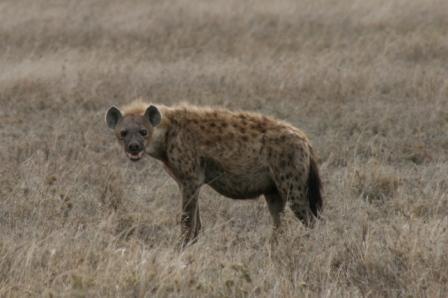
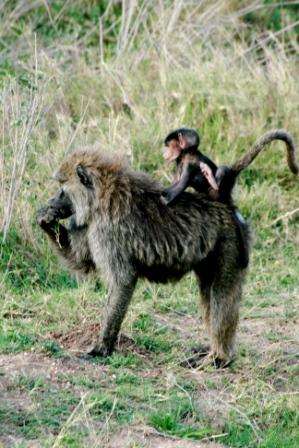
serengeti

If you ever get the chance
no
don't wait for chance 
just decide to make it happen at some point in your life
and go on safari in the Serengeti.


sunrise on the serengeti


Ngorogoro Crater, beside the Serengeti, is beautiful and full of animals as well

cheetah
wart hogs kneel to eat


This is a DicDic. yes that's the name.  They are only two feet tall and they mate for life

breakfast time

One night our campsite was under the tree of life

Two friends had a birthday and the cooks make watermelon "cake" A watermelon cut in half and shaved to look white

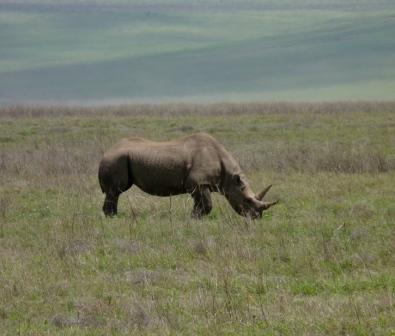
Rhinos are almost extinct and difficult to find

buffalo
wildebeast,  I was invited to a friends house for dinner in a village once for wildebeast


Thanks to Jenn and Charlie for some of these photos

Tuesday, February 15, 2011

turning point

       I arrived at WEECE for another day of work to find the Ugandan women had headed back home with a notebook full of ideas.  I wondered what a normal day in the office might be like, when I noticed there was a buzz of excitement in the air.  As the students cleaned, they talked in an animated fashion about something.  After the school was declared spotless, they put down their rags, removed their kangas, and gathered in the common area in their uniforms.  Here, each day they stood as if at attention while Mama Mrema's long gaze inspected each one.
       "Your shirt is not tucked.  Why is this button hanging off the skirt?  Are we not in a sewing school? (the girls giggled) Please get a needle and thread. Find a comb and fix her hair.  You must all respect yourselves if you expect anyone to take you seriously, and it doesn't cost anything but effort."
       After morning songs and prayers, Mama makes the announcement they were waiting for.
       "Today we begin preparations for graduation."
       The two-year vocational school at WEECE teaches Sewing, Computers, Math, English and Social Studies.  They operate at a reduced rate for teenage students who would not otherwise be in school.  One young girl could not read or write when she first arrived.  It's opened to boys as well, and this year there was one boy on the roster. Last year they were not able to have a ceremony, so this would be the first graduation ever held at WEECE.  Last year's students would come back for the festivities this year to receive their certificates as well.
        For the next week, VICOBA work was put on hold, and there was a flurry of activity at the center.  For the students it meant; exams were taken, sewing completed, song and dance rehearsal, and graduation practice.  For Abby and me it meant grading exams, helping with rehearsals, reorganizing the Women's Sewing Shop, figuring out a way to display the student's garments, and putting out any figurative fires that flared up.  One morning Mama Mrema came in with a big box and had everyone gather around.  I don't know how she did it, but somehow she had gotten a donation of caps and gowns for the students!  They screamed with delight as she explained what they were as they tried them on.  You could see them stand a little taller as at the credibility this gave their accomplishment.
        One day as we sat waiting for a delivery for the ceremony, Mama Mrema told the girls about VICOBA. I was shocked to learn they had been there for two years and didn't even know what WEECE was really all about.  After some research, I discovered there was a disconnect between the school and the center.  It seemed they taught them everything they needed to know to graduate, but missed out on the opportunity  to empower them for life as an adult.  So I wrote a curriculum for the second year year students.  It would be implemented in their final three months at school.  It included things such as:  A business seminar on bookkeeping, accounts payable, receivable, marketing, best practices.  Working for an entire day in the new sewing shop opened at WEECE, for training in how the shop is run.  Learning about VICOBA, and visiting a village to see it in action.  Conversational English to get them over their fear of speaking English, in which the teacher leads a discussion by asking ten open-ended questions.  A class on women's legal rights including marriage, divorce, and inheritance.  Have a session on education in local government and civic groups to encourage them to get involved in their community.  "Future Plan" class where they each lay out a detailed plan for what will happen in the six weeks after graduation to get them started on their goals.  And the biggie: a Senior Sewing Project.  In this exercise the student's would learn to think outside the box, which they would hopefully carry into their business or place of work.  They must design a completely new project that had not been sewn at WEECE.  The teacher must approve their design, a prototype sewn, a cost analysis spreadsheet done on the computer, and a marketing plan laid out, all for a final grade.  I am sure those first year students who might speak fondly of me now, will be cursing my name during senior sewing project next November.  I wrote this curriculum in such a way that volunteers could come in and teach or lead many of these classes to assist the teacher.  I walked into town and made enough copies to last them a few years, (they have no copier) and put them in a binder.
       Graduation day finally arrived and I barely recognized the compound.  It had been transformed with huge tents for shade, and yards and yards of fabric draped for a podium area.  One hundred plastic chairs were placed in the courtyard and the girls tied ribbons on all of them for decoration.  Mama Mrema invited the Maasai to come  and sing as a performance for graduation.  This was the choir she was trying to put together, and it would be their first performance ever. It would also be the first time other Africans had ever been at a function with Maasai present, much less heard them sing.
       As in true African fashion, the ceremony started one hour late as we waited for our esteemed guest of honor to arrive, a Member of Parliament from Arusha. It went on for three long hours with speaker after speaker.  The entire ceremony was in Kiswahili  so I didn't know what was said, but as at any graduation I've ever attended, the students looked hot and more than a little bored.  The Maasai went up to perform and there was literally a collective gasp from the crowd when they began to sing in perfect four part harmony.  The other Africans seemed surprised that the Maasai actually had a talent, and tears were wiped from some of their eyes as the Maasai sang about being the cast-offs, but were people just like them.  The Maasai stood a little taller that day too.
       Finally, when no one else stood to speak, the students prepared for their big moment.  After walking up to shake hands and receive their certificates, their parents came forward, hugged their children and placed all sorts of lei's around their necks.  Colorful necklaces made of flowers or tinsel.  Some students did not have family, and I watched as the other girls ran up, hugged them, and placed their lei's around those girls.  Whether they understood it or not, for the students, this was a pivotal day.  Whatever happens in their life, whatever path they choose, no matter what their living situation, they will always be able to make enough money to eat.  They now have proof in their possession that they have learned the valuable skill of sewing, which is a much needed and esteemed trade in Tanzania.  WEECE has given them a future.

notice the machine is a foot pump because it does not require electricity
 (which is generally not available)